Baked and warm rolls: types and preparation
Introduction
In Japanese cuisine, there is a fairly wide selection of different roles, which differ in the method of preparation, composition, taste and other differences. Among the most popular roles are baked and warm. In this article, we will consider how these roles differ and what types they have.
Features and differences between baked and warm rolls
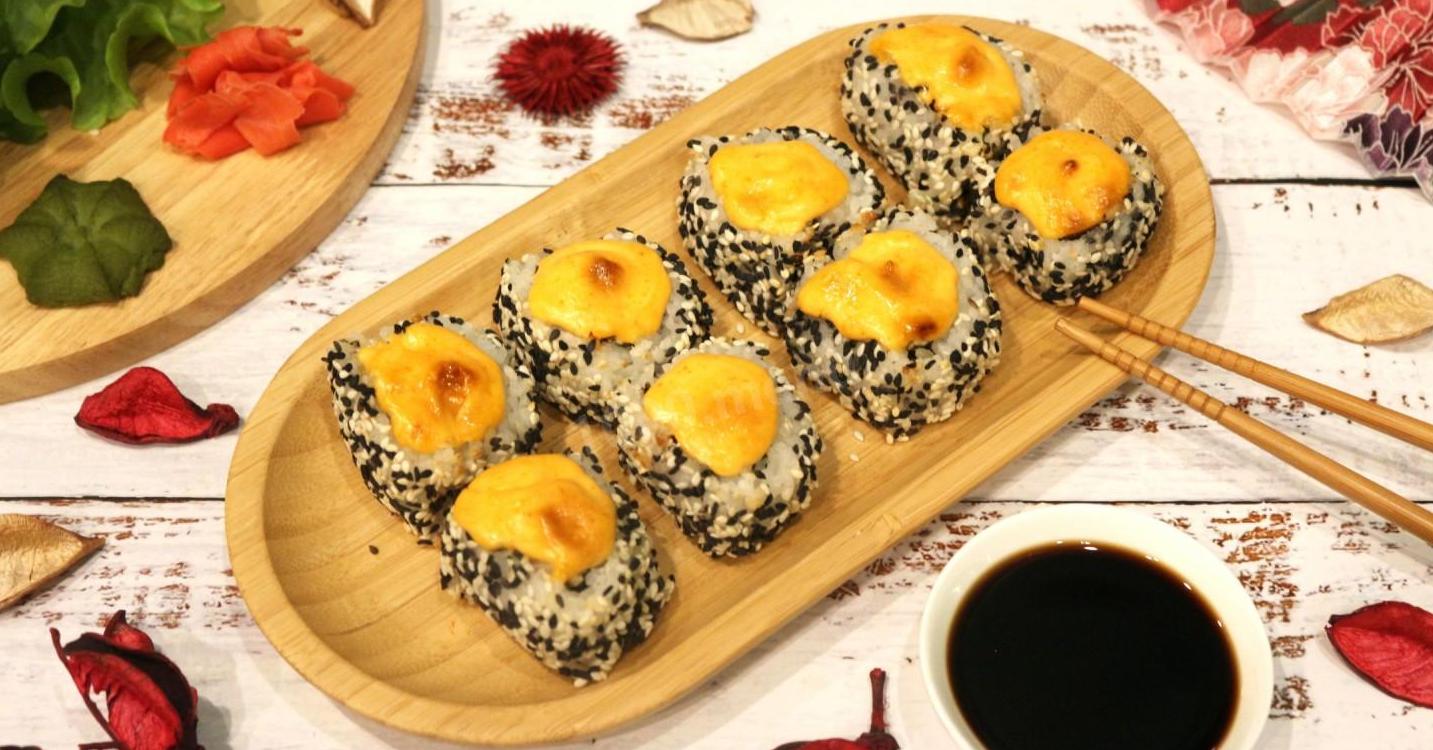
Preparation of baked rolls begins with the usual twisting of a roll from rice, nori, filling and seaweed. Then it is wrapped in foil and sent to the oven for a few minutes. As a result, the roll acquires a crispy crust and aromatic filling. Warm rolls, on the contrary, are prepared by frying in a pan or deep-frying.
They also have a crispy crust, but the inside remains soft and juicy thanks to short heat treatment.

The differences between baked and warm rolls are not only in the cooking method, but also in texture and taste. Baked rolls are more tender and juicier, since the heat treatment occurs evenly throughout the roll.
Warm rolls can have a more pronounced crispy crust and an intense taste due to frying.
In addition, baked rolls are often served with sauces based on mayonnaise or soy sauce, which gives them a richer taste. Warm rolls can be accompanied by different types of sauces, depending on the preferences of the cook or the recipe.
So, although both types of rolls have their own unique features and differences, they are both delicious and popular dishes in Japanese cuisine that can satisfy both sushi and roll lovers.
Types of baked and warm rolls
There are many different types of baked rolls, each of which is distinguished by its taste, filling and cooking method.
- "Dragon" roles. This type of baked rolls got its name due to its unusual appearance, resembling a dragon's head. They usually contain shrimp, avocado and cucumber inside,
and the top is decorated with thin slices of avocado imitating dragon scales.
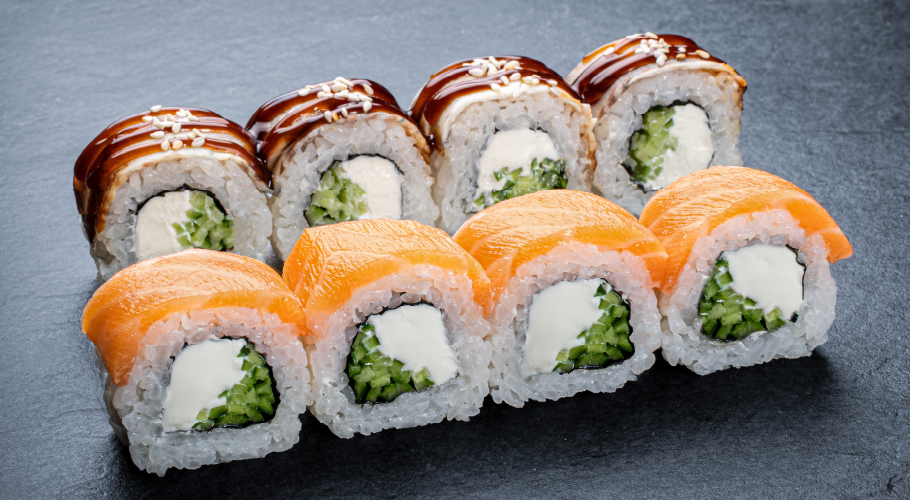
- "Philadelphia" roles. This classic type of roll is named after the city of Philadelphia and has a unique taste thanks to the combination of salmon, cream cheese and cucumber. After baking, the rolls acquire a delicate and aromatic taste.
- "Crispy Crab" roles. This type of roll has a crispy texture thanks to the addition of crab sticks, cucumber and avocado. After baking, the crab sticks become even more aromatic and appetizing.

These are just a few examples of types of baked rolls, and each of them has its own unique taste and aroma, which will definitely appeal to lovers of Japanese cuisine.
Kinds of warm roles
Warm rolls combine traditional ingredients with unusual sauces and are baked to a nice crispy crust. Let's consider several varieties of warm rolls that can be found in Japanese restaurants:
● Dragon roll. This roll got its name from its dragon-like appearance.
It consists of shrimp or crabmeat, cucumber and avocado wrapped in nori and rice, then garnished with unagi sauce and sesame seeds before being baked.
● Philadelphia roll. This roll became famous due to its unusual composition, which includes salmon, avocado and cream cheese.
After it is rolled, it is dipped in batter and fried to a golden crust, which gives it a unique taste and texture.
● California roll. This is one of the most popular options for warm rolls. It consists of crab meat, avocado, cucumber and caviar wrapped in rice and nori.
After assembly, the roll is baked in the oven or on the grill until golden brown. This is just a small list of the various warm rolls that you can try in restaurants. Each of them has its own unique taste and texture, and each is guaranteed to delight sushi lovers with its exquisite flavor combinations.