

Чому до суші подають васабі та імбир?
Вступ
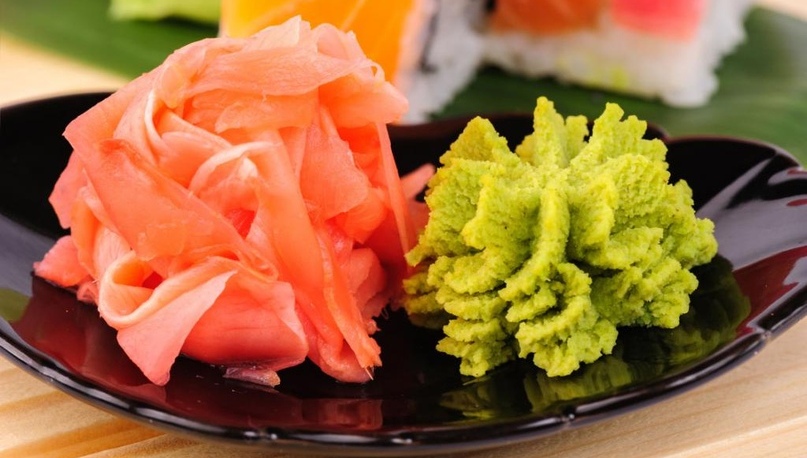
Васабі та імбир є невід'ємними складовими традиційної японської кухні, особливо при подачі суші. Їх використання має як практичні, так і символічні аспекти, що глибоко вкорінені в японській культурі та кулінарній традиції.
Васабі, який часто називають японським хроном, має гострий, пронизливий смак, який відрізняється від інших гострих приправ, таких як чилі чи перець. Його головна функція полягає в тому, щоб підкреслити смак риби і збалансувати жирність сашимі та суші. Васабі не лише додає гостроти, але й має антисептичні властивості, що є важливим при вживанні сирої риби. В японській культурі вважається, що васабі здатен знищувати бактерії і паразити, що можуть бути присутніми у сирій рибі, тому його додають не тільки для смаку, але й для безпеки харчування.
Імбир, який подається у маринованому вигляді, має м'який, злегка солодкуватий смак. Він використовується для очищення піднебіння між різними видами суші. Коли ви їсте різні види риби та морепродуктів, імбир допомагає нейтралізувати залишковий смак попереднього шматочка, дозволяючи повністю насолодитися новими смаками. Окрім цього, імбир також має антисептичні властивості, що додає йому цінності в японській кулінарії.

З символічної точки зору, васабі та імбир також мають своє значення. Васабі уособлює силу і чистоту, оскільки його смак настільки інтенсивний, що він проникає в носові пазухи, очищуючи їх і стимулюючи відчуття. Імбир, навпаки, символізує гармонію і оновлення, адже його здатність очищати смакові рецептори дозволяє насолоджуватися кожним новим шматочком їжі як новим досвідом. Разом вони створюють баланс між гостротою і м'якістю, гармонією і чистотою, що є центральною темою в японській філософії та кулінарії.
Крім того, у японській культурі велике значення надається естетиці та презентації страв. Використання васабі та імбиру не тільки покращує смак їжі, але й додає кольору та контрасту до тарілки з суші, роблячи її візуально привабливою.
Отже, васабі та імбир — це не просто приправи до суші,
а важливі елементи, які покращують смакові якості, забезпечують безпеку
харчування, додають символічного значення і естетичної краси, що разом робить
традиційну японську кухню унікальною і незабутньою.
Як правильно використовувати васалі при вживанні суші
Перед тим, як почати їсти суші, вам слід підготувати васабі. Якщо васабі подають у вигляді пасти, вам не потрібно робити нічого додаткового. Якщо ж це порошок, розведіть його водою до отримання пастоподібної консистенції. Васабі має дуже інтенсивний смак, тому важливо не перебільшити з його кількістю. Зазвичай на один шматок суші достатньо невеликої кількості васабі – розміром з горошину.
· Існує два основні способи додавання васабі до суші:
- Прямо на рибу. Нанесіть невелику кількість васабі на верхню частину шматка риби перед тим, як покласти його на рис.
- До соєвого соусу. Ви можете додати васабі безпосередньо до соєвого соусу, в який потім занурюватимете суші. Однак, цей метод не є традиційним, і деякі гурмани можуть вважати його неправильним.
Коли ви їсте суші, важливо правильно вживати васабі, щоб уникнути неприємних відчуттів. Не змішуйте васабі з великою кількістю соєвого соусу: це може значно змінити смак суші та самого васабі. Вживайте суші цілим шматком: таким чином ви отримаєте збалансований смак риби, рису та васабі.
Пам'ятайте, що в японській культурі вживання васабі має свої традиції. Васабі часто додається кухарем прямо при приготуванні суші, тому додаткове його нанесення може вважатися недоречним.
Як правильно використовувати імбир
Імбир не призначений для спільного вживання з суші як соус чи приправа. Його слід їсти окремо між різними порціями суші. Використовуйте невелику кількість імбиру – приблизно один або два скибочки – між порціями. Надмірне вживання може перекрити смак основної страви.
Імбир можна занурювати в соєвий соус для додаткового смаку, але це не є обов'язковим. Важливо не додавати занадто багато соєвого соусу, щоб не перекрити природний смак імбиру. Імбир має подаватися кімнатної температури, що дозволяє йому найкраще розкрити свої смакові якості. Холодний імбир може бути менш ароматним і менш ефективним для очищення смакових рецепторів.